Strategy into Action
"Strategy without execution remains an illusion."
Most strategies don't fail because of bad ideas, they fail because the business isn't set up to execute them. To move from vision to results, you need a clear operating system built on three pillars.
The three layers of an Operating System.
Sets the destination and defines critical capabilities needed to win.
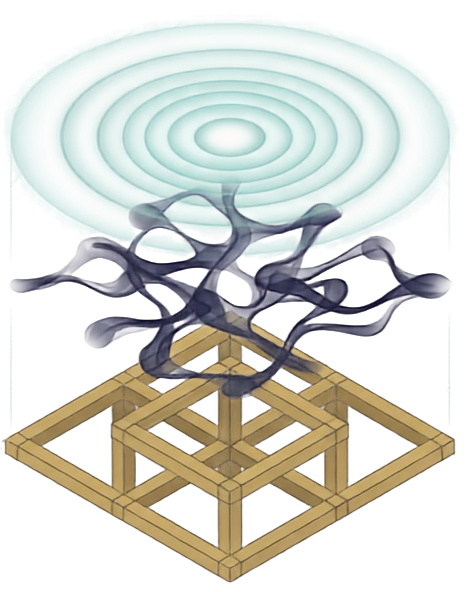
Ensures the team stays in sync and executes the plan.
Provides the processes and tools needed to create value.
Gives people a place to sit, and formal authority to act.
Organisational Design provides the structural blueprint and boundaries.
It focuses on "who" does what and "where" they sit.

To group talent and divide authority so everyone knows their role and who they report to.
Without clear design, you get political gridlock and confusion. Decisions slow down because it's unclear who has the final say.
Operating Model translates strategy into day-to-day value creation.
This is the framework for "how" work actually gets done. It connects your big-picture strategy to your daily operations.

To integrate your people, processes and technology so they work together to create value.
Without a clear model, you get operational waste. People spend time and energy on tasks that don't actually support your strategy.
Operating Rhythm provides the sync that keeps the system alive.
This is the pacing of your business. It is the pulse of regular meetings and reviews that keeps the organisation aligned.
"A rhythm is a dynamic force, not just a schedule on a calendar."
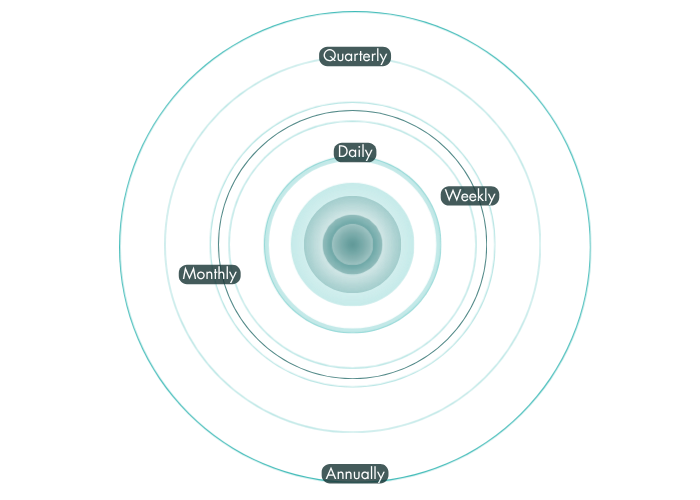
To provide the stability and dependability teams need to perform consistently and adjust to changes in real time.
A simple allotment of time on a calendar. Necessary, but insufficient for execution.
The dynamic force that animates meetings with specific data inputs, clear decision rights, and cultural habits — like data-driven accountability.
Without a defined rhythm, work feels chaotic and reactive. The business falls into constant "firefighting", where execution depends on individual heroics rather than a reliable system.
The heartbeat isn't theoretical. Build yours.
Operating Rhythm Builder turns this layer into something you can see — every meeting, artifact and trigger, mapped into one shareable poster of your team's real cadence.